El Premio Maxwell Finlandia al Logro Científico honra a los científicos que han realizado contribuciones sobresalientes a la comprensión de las enfermedades infecciosas y la salud pública.
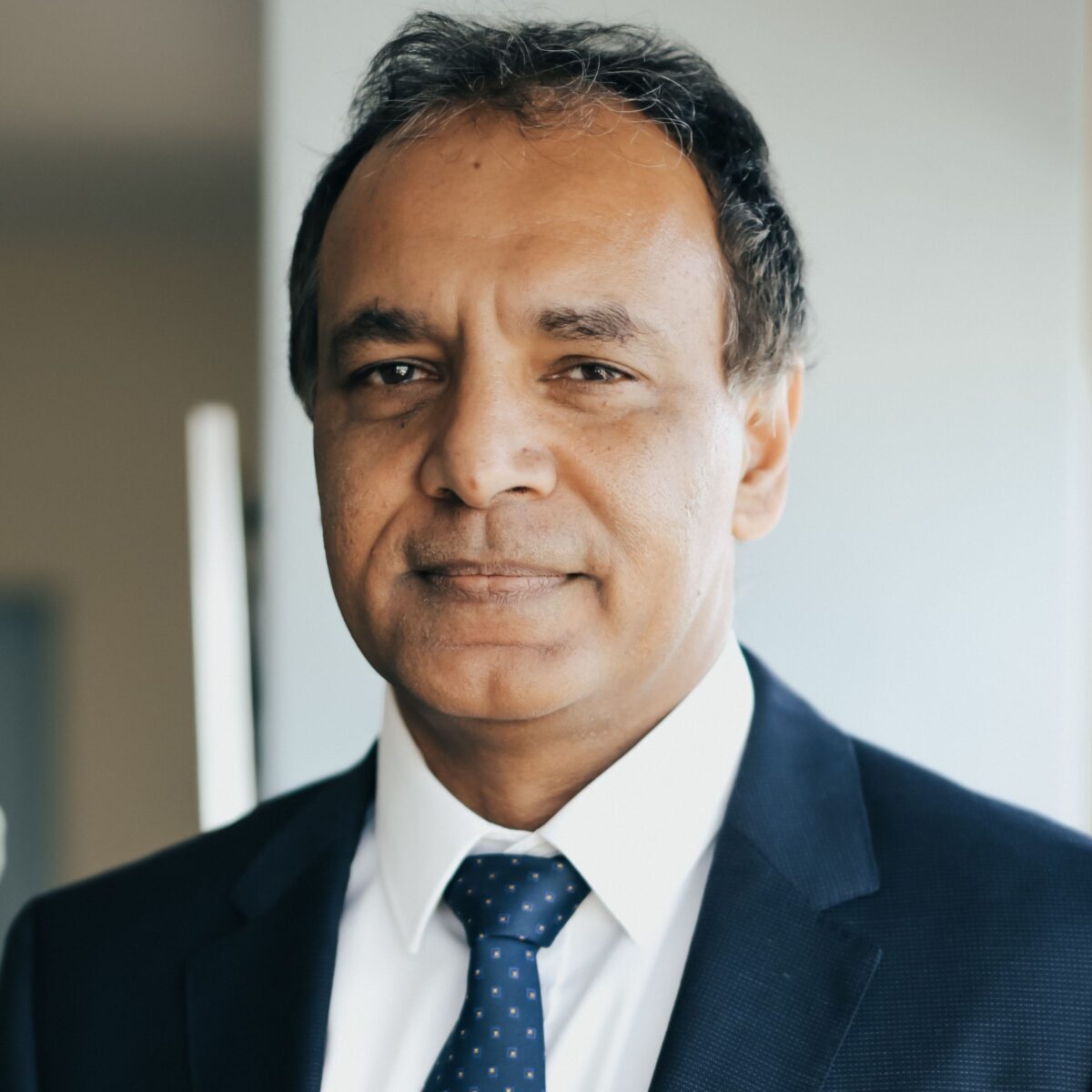
Shabir A. Madhi, MMed, PhD, of University of the Witwatersrand, Johannesburg, South Africa, received the 2026 NFID Maxwell Finland Award for Scientific Achievement, recognizing his lasting contributions and influential career in vaccine research and global disease prevention. El trabajo del profesor Madhi ha generado pruebas definitivas a favor de las vacunas en entornos africanos de alta carga, lo que ha reconfigurado tanto la comprensión científica como las políticas sanitarias mundiales. Fue el líder clínico de un estudio histórico sobre vacunas antineumocócicas conjugadas en casi 40,000 niños en Sudáfrica, que ayudó a respaldar la aprobación de vacunas mejoradas y mostró cómo las interacciones virales neumocócicas y respiratorias contribuyen a la neumonía. Hoy en día, se estima que las vacunas antineumocócicas han evitado cientos de miles de muertes infantiles en todo el mundo. Continúa liderando los esfuerzos para mejorar la asequibilidad y el acceso a las vacunas.
El profesor Madhi también ha dirigido importantes investigaciones sobre las vacunas contra el rotavirus, ayudando a informar las recomendaciones mundiales para su uso en países de ingresos bajos y medianos. Estas vacunas han desempeñado un papel clave en la reducción de las muertes por diarrea grave en niños pequeños. Pionero en la vacunación materna, dirigió el primer ensayo controlado aleatorizado mundial de vacunación contra la influenza (gripe) en mujeres embarazadas, que demostró protección tanto para las madres como para los bebés. También ha dirigido ensayos innovadores de vacunación materna para ayudar a proteger a los bebés contra la enfermedad grave por virus respiratorio sincitial (VRS) (VRS) y el estreptococo del grupo B. Su investigación ha contribuido a mejorar las estrategias de prevención del VIH y la tuberculosis en niños.
Durante la pandemia de COVID-19, el profesor Madhi dirigió los primeros ensayos de vacunas contra el SARS-CoV-2 en África, proporcionando información temprana que ayudó a guiar las decisiones de salud pública. En 2024 años fue galardonado con la Medalla de Oro Albert B. Sabin por sus contribuciones ejemplares en el campo de la vacunología y la prevención. Además de su investigación, dirige importantes programas de formación en vacunología y ha sido mentor de científicos de toda África. Su trabajo continúa dando forma a la política de vacunación y salvando vidas en todo el mundo.
"El trabajo del profesor Madhi ha dado forma directa a la política mundial de vacunación y a la agenda de investigación", dijo Orin S. Levine, PhD, presidente y director ejecutivo de la Washington Research Foundation. "Su carrera refleja los más altos ideales del Premio Maxwell Finlandia: ciencia rigurosa, liderazgo visionario e impacto global duradero en la prevención de enfermedades infecciosas".
An Interview with Shabir A. Madhi
¿Quién o qué te inspiró a trabajar en enfermedades infecciosas?
My journey into infectious diseases, and indeed into research, was rather serendipitous. I first wanted to become an engineer, but I ultimately studied medicine instead. During my years at the University of the Witwatersrand Medical School, vaccinology was not even recognized as a distinct discipline. It was only after specializing in pediatrics that I realized how profoundly infectious diseases shaped the lives of the most vulnerable members of society.
My residency at Chris Hani Baragwanath Academic Hospital (CHBAH) in Soweto in the mid-1990s coincided with the explosion of the HIV epidemic. South Africa had only recently emerged from apartheid and was grappling with immense social and political challenges, and the growing HIV crisis was not met with the urgency it demanded. By the late 1990s, the South African government, including the then president and minister of health, had succumbed to misinformation and conspiracy theories questioning the link between HIV and AIDS. Officials responded with reluctance and, at times, outright denial of the devastating impact of HIV on society, particularly on women and children.
During my training, I witnessed an explosive rise in HIV infection among women of childbearing age, with almost one in four pregnant women infected.
Although antiretroviral therapy capable of preventing mother-to-child transmission had become available, limited access, together with the government's failure to implement effective prevention programs, meant that nearly 5% of babies born in South Africa in the late 1990s acquired HIV. The consequences were heartbreaking. At CHBAH, almost 40% of hospitalized children were living with HIV, many arriving severely malnourished and suffering from advanced opportunistic infections. Approximately one-quarter died following admission. Witnessing such suffering left an indelible impression on me.
At the same time, I was struck by the large numbers of children hospitalized with diseases for which effective vaccines had existed for decades, including diphtheria, pertussis, tetanus, and measles. Under apartheid, South Africa had never established a comprehensive national immunization program, and it was only after democracy in 1994 that routine childhood immunization began to expand. Caring for children with severe malnutrition, measles, and neonatal tetanus was an almost daily occurrence. It became impossible not to ask why so many children continued to die from illnesses that modern medicine already had the tools to prevent.
My transition into research coincided with another remarkable opportunity. In 1996, shortly after I completed my training, a pneumococcal conjugate vaccine (PCV) targeting the leading bacterial cause of childhood pneumonia and meningitis entered clinical development. During my clinical training, the burden of pneumococcal disease was all too evident, particularly among children living with HIV, whose risk of invasive pneumococcal disease was 40- to 100-fold higher than that of uninfected children. Around that time, Professor Keith Klugman, then with the South African Medical Research Council, successfully advocated for a Phase III trial of a 9-valent pneumococcal conjugate vaccine in Soweto. Although I was largely research-naïve, a colleague alerted me to the opportunity to join Keith's team. I applied, and in what proved to be a defining moment in my career, Keith entrusted me with leading the clinical investigation of a trial that enrolled about 40,000 children-the largest vaccine efficacy trial undertaken at that time.
The study transformed my career. It demonstrated that PCV was highly effective against severe pneumonia and invasive pneumococcal disease, including among children living with HIV. Equally exciting were unexpected findings that pneumococcal vaccination reduced hospitalization for virus-associated pneumonia, showing that vaccines could influence disease in ways we had not previously appreciated.
Those discoveries sparked a lasting curiosity about the broader impact of vaccines and the importance of generating evidence to inform public health policy.
That experience also fundamentally changed how I viewed medicine. As clinicians, we care for one patient at a time. Vaccines, however, can change the trajectory of entire communities and generations. Having witnessed hundreds of children die from vaccine-preventable diseases, I then saw how rigorous clinical research could help reduce global pneumococcal pediatric deaths from approximately 850,000 to 350,000 annually. That convinced me that research is one of the most powerful forms of patient care. It also left me with a simple but enduring question: How can we do even better? That question has motivated my work ever since.
What are the greatest threats and opportunities in infectious diseases?
Infectious diseases have always exploited poverty, inequality, and fragile health systems, and these remain their greatest allies. Whether the threat is HIV, tuberculosis, pneumococcus, respiratory syncytial virus (RSV), Ebola, or an emerging pandemic pathogen, the communities that bear the greatest burden are almost always those with the least access to prevention, diagnostics, and treatment.
We possess extraordinary scientific tools, yet millions of people are denied their benefits simply because of where they are born or the resources available to their health systems.
Over the past three decades, this inequity has been one of the defining frustrations of my career. I have been privileged to contribute to the clinical development of vaccines against pneumococcus, rotavirus, and COVID-19, and to maternal immunization strategies that protect young infants against influenza, RSV, and, hopefully soon, group B Streptococcus. Yet despite these scientific advances, far too little has changed in ensuring timely access to lifesaving vaccines where they are needed most. Across much of Africa and other low- and middle-income countries (LMICs), new vaccines are still introduced 10 to 20 years after their availability in high-income countries. During those delays, hundreds of thousands of preventable deaths occur—an unacceptable reality in an era of unprecedented scientific progress.
Global initiatives such as Gavi, the Vaccine Alliance, have transformed childhood immunization and enabled many lower-income countries to introduce new vaccines. However, these achievements remain fragile. Declining donor support, shifting geopolitical priorities, and reduced development assistance threaten to reverse decades of progress. Equally concerning is the dependence many countries have developed on external financing to sustain immunization programs and broader health services. As global priorities evolve, governments in low- and middle-income countries will need to take greater ownership of financing and strengthening their health systems to sustain progress against infectious diseases.
The erosion of trust in science may ultimately prove as dangerous as the pathogens themselves. It places an even greater responsibility on scientists not only to generate robust evidence, but also to communicate uncertainty honestly, engage openly with the public, and remain independent of political or ideological influence.
Public trust is earned through transparency, humility, and scientific integrity.
Another major concern is the increasingly constrained funding environment for biomedical research. Reduced investment in science, particularly vaccine research, risks slowing progress at precisely the moment when unprecedented opportunities are emerging. Artificial intelligence (AI) is accelerating antigen discovery, improving vaccine design, and making product development faster and more efficient. Advances in genomics, structural biology, novel vaccine platforms, and monoclonal antibodies are also transforming our ability to prevent infectious diseases that have challenged us for decades. These innovations hold enormous promise not only for responding to emerging threats such as Ebola and Marburg virus disease, but also for tackling longstanding global challenges, including antimicrobial resistance, which I believe is one of the most under-recognized threats to global health security.
Equally encouraging is the growing scientific leadership emerging from Africa and other low- and middle-income regions. Increasingly, these countries are contributing not only to research but also scientific leadership, innovation and policy. That transition must continue. Scientific capacity needs to be strengthened across the entire research ecosystem, from discovery science and clinical trials to epidemiology, manufacturing, and implementation research, so that dependency is replaced by genuine health-security self-sufficiency.
The future should not be one in which solutions are simply imported into Africa; it should be one in which Africa helps define the global research agenda.
¿Qué consejo le daría a la próxima generación de profesionales de enfermedades infecciosas?
Persevere, remain curious, stay humble, and trust your intuition to ask important questions, but always let evidence determine the answers. Science is rarely a straight path. It is built on persistence, resilience, and the willingness to challenge accepted dogma when the evidence points in a different direction.
The story of RSV offers an important lesson. Decades elapsed between the discovery of the virus and the successful development of vaccines and monoclonal antibodies to protect infants and older adults. Early setbacks, including the failed RSV vaccine of the 1960s, might easily have discouraged an entire field. Instead, scientists learned from failure, and those lessons ultimately paved the way for today's breakthroughs.
Scientific progress is measured not only by successes, but also by how we respond to disappointment.
Although the current geopolitical climate and funding environment may appear discouraging, it is important to maintain perspective. Over the past century, few fields have contributed more to improving human health than infectious disease research. AI, genomics, structural biology, and novel vaccine platforms are transforming how we discover, develop, and evaluate vaccines. The scientific challenges remain enormous, but so does the opportunity to make a lasting impact.
Finally, invest in people as much as you invest in science. No meaningful achievement is ever the work of one individual. In South Africa, we have the philosophy of Ubuntu: "I am because we are." It reminds us that our success depends on our interconnectedness with colleagues, trainees, patients, and the communities we serve. Science should be competitive in the pursuit of excellence, but never at the expense of generosity. Our greatest responsibility is not only to make discoveries ourselves, but also to create opportunities for others.
When you think about your legacy, what do you hope people will remember most?
I hope my legacy demonstrates that excellence in science has no geographical boundaries. It should be possible for a scientist who is born, trained, and based in Africa to make discoveries that influence global policy and improve the lives of people around the world. If my career has helped challenge outdated perceptions of where world-leading science can be conducted, then I will regard that as one of my most meaningful contributions.
I also hope to be remembered as someone who understood that scientific achievement is never an individual endeavor.
My achievements have always reflected the efforts of exceptional colleagues, collaborators, students, healthcare workers, and the thousands of families who placed their trust in us by participating in our studies.
Perhaps my greatest satisfaction comes from mentoring the next generation of scientists. Watching doctoral students and early-career investigators develop into independent leaders, many of whom now challenge my own thinking and are making important contributions, has been among the most rewarding aspects of my career.
Throughout my career, I have also tried to remain guided by honesty, integrity, and evidence. There have been occasions when speaking openly about the science was uncomfortable or unpopular, particularly when misinformation or political ideology threatened public health. Nevertheless, I have always believed that science serves society best when it is transparent, objective, and guided by integrity.
¿Alguna idea adicional?
As a South African, I have drawn inspiration from two remarkable leaders whose words continue to resonate with me.
As Nelson Mandela reminded us:
“There can be no keener revelation of a society’s soul than the way in which it treats its children.”
And Archbishop Desmond Tutu reflected:
"When we see the face of a child, we think of the future. We think of their dreams about what they might become, and what they might accomplish."
These two quotations capture the values that have shaped my career.
For additional perspectives from Shabir A. Madhi, MMed, PhD, listen to the NFID Infectious IDeas podcast episode, Vaccines, Equity, and Africa’s Scientific Future:

Image Source: NFID