
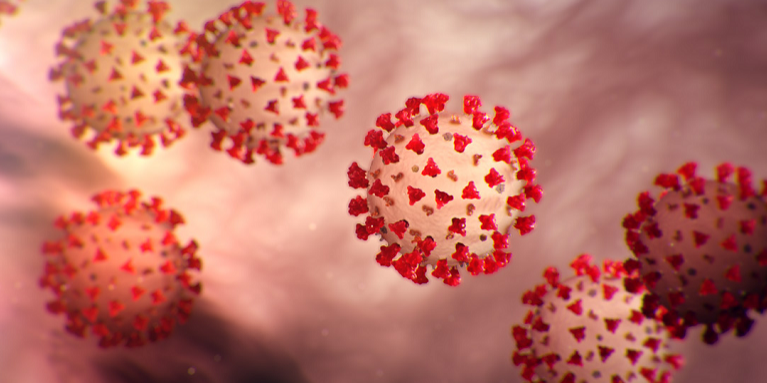
¿Qué son los coronavirus?
El virus que causa el COVID-19 es miembro de un gran grupo conocido como coronavirus, que infecta tanto a personas como a animales. Se llaman coronavirus porque las espigas que cubren el exterior del virus recordaron a los investigadores a una corona. Corona significa corona en latín.
La mayoría de los coronavirus no causan nada peor que el resfriado común, pero algunos pueden causar enfermedades graves, como el síndrome respiratorio agudo grave (SARS), el síndrome respiratorio de Oriente Medio (MERS) y el COVID-19.
La enfermedad por coronavirus 2019 (COVID-19) se identificó por primera vez en Wuhan, China, en 2019. The coronavirus that causes the disease is called SARS-CoV-2. More than 7 million people worldwide have died from COVID-19 since the start of the global pandemic.
Una guía rápida sobre el COVID-19
Cómo se propaga |
Gotitas diminutas y partículas en el aire que se liberan cuando las personas respiran, hablan, cantan, tosen o estornudan |
Síntomas comunes
Síntomas graves:
|
|
Impacto |
|
¿Vacuna? |
Sí |
¿Se puede tratar? |
Sí |
¿Qué tan común o grave es el COVID-19?
El COVID-19 no es la emergencia sanitaria mundial que era hace unos años, pero sigue siendo una enfermedad grave.
- La mayoría de las personas se recuperarán por completo, pero el COVID-19 puede causar una enfermedad grave que lleva a la hospitalización o la muerte.
- From October 2025 to April 2026, at least 3.8 million people in the US came down with COVID-19, 120,000 went to the hospital, and 12,000 died, according to preliminary estimates from the US Centers for Disease Control and Prevention(opens in new tab) (CDC).
- Hasta 1 de cada 4 adultos tienen síntomas que persisten durante meses. Los pacientes con lo que se conoce como COVID prolongado pueden tener una amplia gama de síntomas, como tos, dolores de cabeza, sensación de cansancio, problemas con el gusto o el olfato y problemas para concentrarse o recordar.
¿Cuáles son las causas del COVID-19?
The virus that causes COVID-19 is called SARS-CoV-2. It spreads in tiny drops that people release when they breathe, talk, sing, cough, or sneeze. Las gotas más pequeñas pueden flotar en el aire.
Las personas pueden propagar el virus antes de tener síntomas.
¿Qué es el COVID prolongado?
Los síntomas del COVID-19 a veces reaparecen, o repuntan, unos días después de que un paciente se recupera. Los síntomas de rebote suelen ser leves y desaparecen en unos pocos días.
Los síntomas que duran 3 meses o más se conocen como COVID prolongado. Puede sucederle a cualquier persona que haya contraído el virus, pero es más común en personas que se enfermaron gravemente, especialmente si fueron hospitalizadas. El COVID prolongado también es más común en personas con otros problemas de salud y en aquellas que no han sido vacunadas.
Síntomas
La mayoría de las personas se infectan con cepas humanas de coronavirus en algún momento de sus vidas. Estas enfermedades suelen durar poco tiempo y los síntomas pueden incluir:
- Fiebre
- Escalofríos
- Tos
- Dolor de cabeza
- Moqueo
- Falta de aire
- Dolor de garganta
Additional symptoms have been reported with COVID-19.(opens in new tab) Coronaviruses can cause other more serious illnesses, such as pneumonia or bronchitis. Esto es más común en personas con enfermedades cardíacas y pulmonares, personas con sistemas inmunológicos debilitados, bebés y personas mayores.
¿Quiénes están en mayor riesgo?
Cualquier persona puede contraer COVID-19, pero algunas personas tienen más probabilidades de enfermarse gravemente o morir, entre ellas:
- Personas mayores de 65 años
- Personas con sistemas inmunitarios debilitados
- Personas que tienen afecciones crónicas como enfermedades cardíacas, pulmonares, renales, diabetes u obesidad
Los niños menores de 2 años y las mujeres embarazadas también tienen más probabilidades de enfermarse gravemente a causa del COVID-19.
Prevención
La mejor manera de protegerse contra el COVID-19 es vacunarse. Las personas que se vacunan aún pueden enfermarse, pero es mucho menos probable que se enfermen gravemente, sean hospitalizadas o mueran.
Otras medidas para reducir las probabilidades de enfermarse:
- Lávese las manos con agua y jabón durante al menos 20 segundos o use desinfectante de manos
- evitar tocarse los ojos, la nariz y la boca;
- cubrirse la boca al toser y estornudar con un pañuelo desechable;
- limpiar y desinfectar objetos y superficies;
- Evitar el contacto cercano con personas enfermas
- Use una mascarilla, especialmente si tiene un alto riesgo de enfermarse gravemente.
- tomar medidas para que el aire que respire sea más puro, como abrir las ventanas o salir al aire libre.
Si se siente enfermo, quédese en casa para evitar transmitir la enfermedad a otras personas.
Tratamiento
Si cree que puede tener COVID-19, hágase la prueba. Si el resultado de la prueba es positivo, hable con un profesional de la salud de confianza para ver si el tratamiento es adecuado para usted.
Los medicamentos para tratar la enfermedad deben tomarse dentro de los pocos días posteriores a la aparición de la enfermedad. El COVID-19 comparte síntomas con muchas otras enfermedades, y los medicamentos contra el COVID no funcionan en ellas, por lo que es importante hacerse la prueba para recibir el tratamiento adecuado.
Se ha demostrado que dos píldoras hacen que la enfermedad por COVID-19 sea menos grave y dure un período de tiempo más corto. Cualquiera de los dos debe tomarse no más de 5 días después de que comiencen los síntomas.
- Nirmatrelvir con ritonavir
- Molnupiravir
Para ayudar a aliviar los síntomas:
- tomar analgésicos y medicamentos para controlar la fiebre;
- usar un humidificador o tomar una ducha caliente;
- Beba mucho líquido.
- quedarse en casa y hacer reposo.
SARS y MERS: primos del COVID-19
El síndrome respiratorio de Oriente Medio (MERS) apareció por primera vez en Arabia Saudita y Jordania en 2012. La Organización Mundial de la Salud (OMS) ha notificado más de 2,600 casos en 27 países. Los síntomas incluyen fiebre, tos y dificultad para respirar. A menudo se desarrolla neumonía. Más de un tercio de los casos notificados a la OMS han muerto, pero esto probablemente sobreestima la gravedad de la enfermedad. La OMS dice que muchas infecciones por MERS son leves y nunca se reportan.
El síndrome respiratorio agudo severo (SARS) apareció en el sur de China en 2002. Las autoridades sanitarias registraron unos 8,000 casos y más de 770 muertes en 29 países. La fiebre alta, el dolor de cabeza y el dolor muscular a menudo iban seguidos de tos y problemas respiratorios. Casi 1 de cada 10 personas infectadas murieron. El virus estaba contenido en 2003 y no ha vuelto a aparecer.
Actualizado el 2026 de septiembre
Sources: American Academy of Family Physicians, American Academy of Pediatrics, American College of Obstetricians and Gynecologists, Centers for Disease Control and Prevention, Food and Drug Administration, Infectious Diseases Society of America, World Health Organization
Recursos relacionados
2026 Encuesta Nacional de Enfermedades Respiratorias
La encuesta nacional 2026 examina actitudes y comportamientos con respecto a la gripe, el VRS, el COVID-19 y la enfermedad neumocócica.
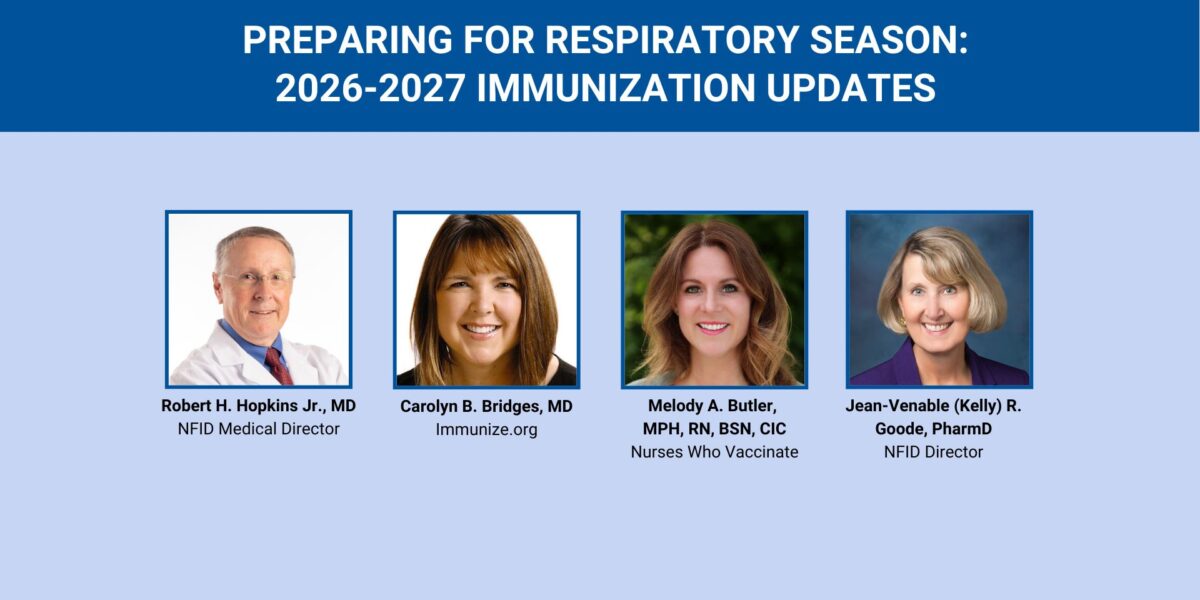
Preparación para la temporada respiratoria: actualizaciones de vacunación 2026-2027
Únase a la NFID para participar en un seminario web en el que se destaca la importancia de la vacunación para ayudar a protegerse contra enfermedades graves durante la próxima temporada de enfermedades respiratorias...
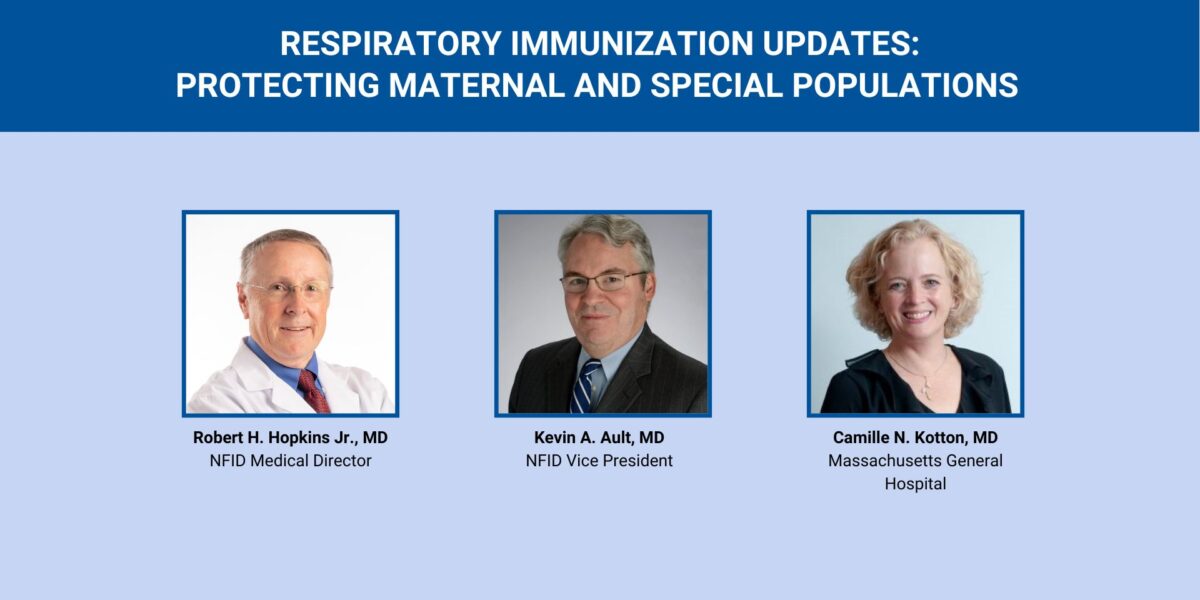
Actualizaciones sobre la vacunación respiratoria: cómo proteger a las poblaciones maternas y especiales
En este seminario web grabado, la NFID organiza un debate sobre la importancia de la vacunación respiratoria entre las mujeres embarazadas y las personas inmunodeprimidas...
Artículos Relacionados

Nueva encuesta: La mayoría de los adultos estadounidenses apoyan las vacunas, pero muchos siguen sin tener claras las recomendaciones sobre las vacunas respiratorias
La NFID lanza la Iniciativa Nacional de Comunicaciones Respiratorias para ayudar a ofrecer una guía clara, coherente y basada en evidencia sobre la prevención de enfermedades respiratorias

La NFID anuncia el lanzamiento de la Iniciativa Nacional de Comunicaciones Respiratorias
NRCI reúne a las principales organizaciones de vacunación, defensa del paciente y salud pública para hacer que la guía de prevención basada en evidencia sea más fácil de encontrar, comprender y usar.
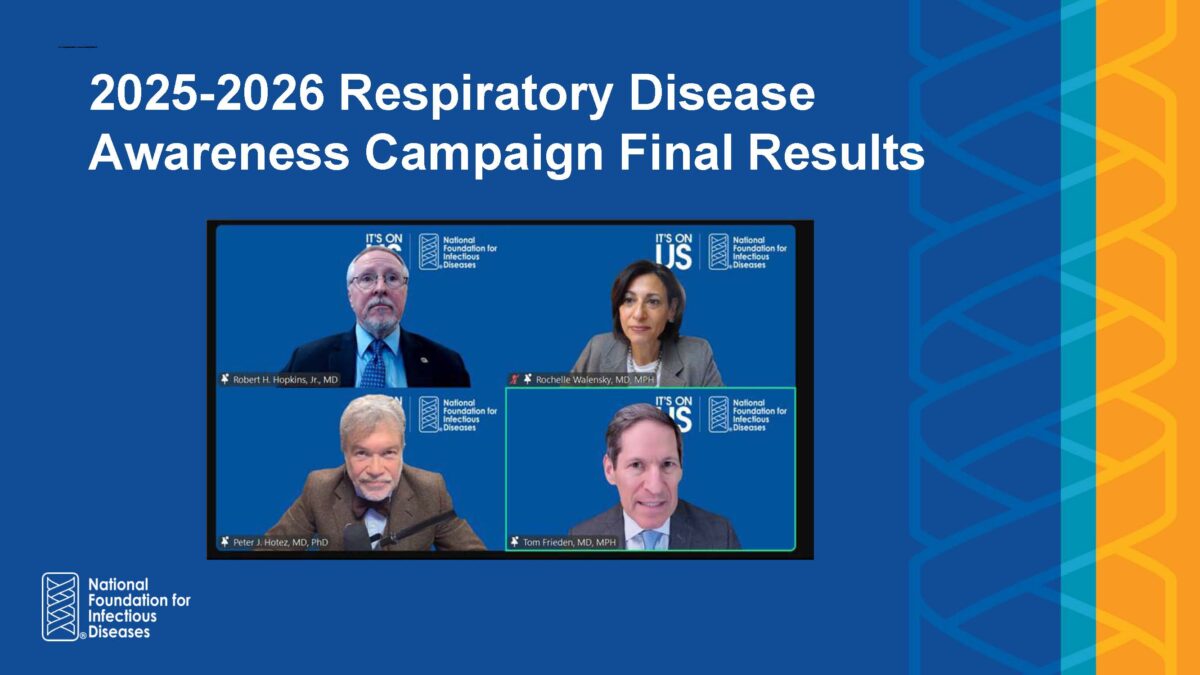
Avances en la prevención en una temporada respiratoria compleja
Resumen de la campaña respiratoria 2025-2026: la NFID y sus socios instan a la vacunación para ayudar a proteger contra el COVID-19, la gripe, el VRS y la enfermedad neumocócica